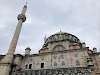
It is an old Byzantine church converted into a mosque centuries ago, with some ruins of an ancient Roman Bath in the garden. It is not a place to see mosaics or frescos but one can still admire this old Easyern Roman architecture. The building is centrally located at the heart of the ancient city near by Suleymaniye Mosque, with an easy access by subway, bus, taxi or a short walk from the Grand Bazaar. It is open to public with no charge except the worshipping hours....
Sitting in the lee of the Valens Aqueduct, on the site where a Roman bath once stood, is this Byzantine church with a chequered history. Built and rebuilt several times between the 6th and 12th centuries, it was converted into a mosque shortly after the conquest in 1453. The mosque is named after the Kalender brotherhood of dervishes, which used the church as its headquarters for some years after the conquest. The building has the cruciform layout characteristic of Byzantine churches of the period. Some of the decoration remaining from its last incarnation, as the Church of Theotokos Kyriotissa (her Ladyship Mary, Mother of God), also survives in the prayer hall with its marble panelling and in the fragments of fresco in the narthex (entrance hall).
Calendarhane mosque is situated in the historical city center, now Fatih district, European side in Istanbul. This is interesting object in architecture, whichhas a long and complicated history. This mosque is a famous former Bizantic church named by Theotokos Kyriotissa, which means Madonna Kyriotissa. But firstly it was Roman Tample and thermal baths on approximately 6-7 century. After it was changed for Bizantic church. As a Eastern Orthodox church it was built in 12 century. And after all, when Constantinople was conquered by Ottomans, this famous sacred place was converted one more time - in the mosque. Such a interesting history of this place, so worth visiting.
Former church. Needs a renovation big time. It has one of the worst toilet although it is not free...
One of the best mosques in Istanbul. The best thing is that there are no tombs...
Came across this whilst looking for good views of the Valens Aqueduct, didnt enter but walked around it. Another example of a church converted into a mosque.
Kalenderhane Camii. A former Eastern Orthodox church in Istanbul, converted into a mosque by the Ottomans. With high probability the church was originally dedicated to the Theotokos Kyriotissa. The building is sometimes referred to as Kalender Haneh Jamissi and St. Mary Diaconissa. This building represents one among the few extant examples of a Byzantine church with domed Greek cross plan. Area and mosque had not been preserved good enough.
Very good 👍
Good place to go to
❤️
Nice
Needs restoration
Doğu Roma döneminden kalma nadir eserlerden biri olan ve 18. yüzyılda kiliseden camiye çevrilen yapı muhteşem ihtişamı ve huzurlu ortamı ile ziyaretçilerini bekliyor. Theotokos Kyriotissaya adanmış olan kilise, Osmanlı döneminde Kalender Tarikatı tarafından kullanıldığı için Kalenderhane Camii ismini almıştır. 1930 yılında caminin minaresine yıldırım düşmüş ve yıkılmış sonrasında atıl durumda kalan cami 1968 yılında tekrar ibadete açılmıştır. Yolunuz bu civara düşerse mutlaka ziyaret edin. Ayrıca yakınında bulunan Süleymaniye Camii, Şehzade Camii, Beyazıt Camii, Kapalıçarşı... gibi yerlerede uğrayabilirsiniz. Ulaşım için vezneciler metro kullanılabilir.
It is a building from the Eastern Roman period in the Vefa district of Istanbul. It is located in the south of the easternmost end of the Bozdoğan Aqueduct. It is in the form of the Eastern Orthodox Church. It was converted into a mosque by the Ottomans in the 18th century. It is likely that the church was originally dedicated to the Theotokos Kyriotissa. The structure represents one of the few existing examples of the Byzantine church with a Greek cross arched. It is assumed that the building belongs to the 9th or 10th century according to its plan and stylistic features. By the way, whenever I go to the area where the pictures are taken, I will definitely visit it and I will leave very happy and peaceful, with its minaret structure and its old appearance and original distinctive atmosphere, it takes away the middle age and I suggest you hurry to visit the person and experience that beautiful spiritual atmosphere.
There are different opinions about the old name of the church, which is located on the Marmara side of Bozdoğan Aqueduct in Vezneciler district around Şehzadebaşı. Until the 1935s, it was claimed in all publications that the building was the Diakonissa Church and was introduced with this name. However, the Diakonissa Church, built in the 5th century, is not that old in terms of its plan and architecture. Based on an unclear information found in a deed of Fatih Sultan Mehmed for the first time in 1935, the view that the building could be the Akataleptos Monastery Church emerged. There was indeed a monastery known by this name, adjacent to the Bozdoğan Arch. However, for the first time in Byzantine history, XI. century is commemorated. In recent studies, two fresco paintings of Mary in one of the side cells were nicknamed Kyriotissa. For this reason, although the church belongs to the Akataleptos Monastery, it is possible that it bears the name of Mary. As a matter of fact, the church belonging to the Pantokrator Monastery is composed of three adjacent structures and all of them bear the names of separate saints.
The mosque is one of our mosques that was gathered from the church.It is in the form of the Eastern Orthodox Church.Although it is not known when the building started to be structured as a church, it is estimated that it was built between the 9th and 12th centuries during the Eastern Roman period.Most likely the church was dedicated to Theotokos Kyriotissa in its original state.The main space of the Kalenderhane Mosque is entered through the narthex covered with vaults. The middle of the main space is covered with a pendentive dome, and this main dome is supported by barrel vaults to reveal the ceiling cover.The walls of the mosque are a mixture of stone and brick.The building, whose interior walls are decorated with colored marble coating and reliefs, is open to worship and is also a frequent destination for local and foreign guests.The building represents one of the few existing examples of a Byzantine church with Greek cross arches.In the courtyard of the mosque, there are the remains of the walls, which were included in the structure in the early days of the church, but are now in ruins.The dome of the mosque is placed on the circle formed by arches knitted from four corners.There are mosaic patterns on the dome, which are apparently not very old.Especially the marble coatings inside the building are eye-catching.The first structure on this site was the Roman bath.Following the sixth century (dating was done by looking at the stonemasonry), the large dome and semi-domes of the church were rising despite the Bozdagan arch.Later—probably the seventh century—a larger church was built south of the original church.A third church was used as a sanctuary again.The semi-domes can then be dated to the end of the twelfth century in the Commenian period.The church was surrounded by monastic structures.All of them were completely destroyed during the Ottoman period.After Constantinopol was captured by the Latins, the building was used as a Roman Catholic church.After Fatih Sultan Mehmed conquered Istanbul, the place is called Kalenderhane because he allocated this church to dervishes named kalender in the army.Dervishes used this place as a madrasa.Since then it was known as Kalenderhane (Kalender house).In the 18th century, it was converted into a mosque by Babüssaade (palace) Agha Maktul Beşir Ağa.
Bu sabah namazını burda kılalım dedık ...anadolu yakasından geldik ...ama cami kapalı böylemi olması lazım nerede buranın imamı yada neden atanmıyor ...hazır camiyi işletmekten aciziz...direk cimere yazılması lazım....1yıldız camiye degil ilgililere
Kalenderhane Mosque or Theotokos Kyriotissa Church (Greek: Εκκλησία της Θεοτόκου Κυριώτισσας) is an Eastern Roman building in the Vefa district of Istanbul. It is located in the south of the easternmost end of the Bozdoğan Aqueduct. It is in the form of the Eastern Orthodox Church. It was converted into a mosque by the Ottomans in the 18th century. It is likely that the church was originally dedicated to the Theotokos Kyriotissa. The structure represents one of the few existing examples of the Byzantine church with a Greek cross arched. It is assumed that the building belongs to the 9th or 10th century according to its plan and stylistic features.Since the building was first used by dervishes belonging to the Kalender Sect in the Ottoman period, its name was Kalenderhane. In the courtyard of the mosque, there are wall remains that were included in the structure in the early days of the church but now have been demolished. The dome of the mosque is placed on the circle formed by arches knitted from four corners. There are mosaic patterns on the dome, which seem to be not very old. Especially the marble coatings in the building are eye-catching.
Kalenderhane Mosque, formerly known as Theotokos Kyriotissa Church (Greek: Εκκλησία της Θεοτόκου Κυριώτισσας), is an Eastern Roman structure in the Vefa district of Istanbul. It is located south of the easternmost end of the Bozdoğan Aqueduct. It is in the form of the Eastern Orthodox Church. It was converted into a mosque by the Ottomans in the 18th century. Most likely the church was originally dedicated to Theotokos Kyriotissa. The building represents one of the few existing examples of a Byzantine church with Greek cross arches. According to its plan and stylistic features, it is assumed that the building belongs to the 9th or 10th century.
After the conquest of Istanbul by Fatih Sultan Mehmet, it was converted into a mosque. It was restored in 1969 when it was abandoned and reopened for worship. It is next to the Bozdoğan arch between the Şehzadebaşı Vefa districts. Some parts need repair. The imam in charge of the mosque, the polite person, is on duty five times, and his congregation is less than in the morning and evening.
It was a beautiful mosque next to an old wall or fortress.Needs a little renovation. The route is easily accessible
The exact construction date and name of the building are disputed. After the conquest, the monastery was allocated to the Kalenderi dervishes together with its annexes, that is, it was not immediately converted into a mosque, but it was realized with the addition of a wooden pulpit in the 18th century. The temple, which remained from the classical Byzantine monastery complex, has been repaired and renovated throughout history, but the recent restoration has lost some of its elements to the structure due to the fact that the building has been idle for many years. I can say that it is one of the most beautiful and spiritual places in Vefa district. It has an atmosphere as if it was a thousand years ago, away from the wearisome pace of the city. Both very sympathetic imams.
You will be amazed by the exterior structure of this mosque, which has a history of number ten, and the smell of history permeating its walls. Disappointment after entering the time for prayer.. They left the back two rows open and set up a barrier from there, so you can pray in the air of a masjid next to the shoe racks of the mosque. ..
Kalenderhane Mosque, or formerly Theotokos Kyriotissa Church, is a structure dating from the Eastern Roman period in the Vefa district of Istanbul. It is in the form of the Eastern Orthodox Church. It was converted into a mosque by the Ottomans in the 18th century.
Gidip görülmesi gereken bir camii, tarih kokuyor.
If you want to worship, feeling the Ottoman Empire with the Roman Empire here for almost a sacred kâse.genellikl empty and columns in the mosque çevrilmiştir.iç from the Church of the Congregation lack of prior sessizdir.3 century, windows, buttresses and each side of the marble-covered walls, a magnificent cultural awe It is a wonderful place where you can go not only for worship, but also for seeing Roman art. You can sit on the outside benches with a free and unlimited tea, examine the beautiful exterior architecture of the building and feel it up to your marrow.
It is a historical mosque located next to the Bozdoğan arch, which is in the middle of Vezneciler, Süleymaniye and Vefa districts. The old church in the Eastern Roman Empire period was changed and turned into a mosque, and it was named Kalenderhane Mosque after the conquest because it served the calender dervishes.
The building is an old Orthodox church, converted into a mosque by the Ottomans. It is named after the order of the Kalender dervishes that were used as headquarters for some years. The structure consists of a cross-shaped plant - characteristic of the Byzantine churches - and still retains some of the decoration of the temple dedicated to Saint Mary Mother of God (Theotokos Kyriotissa) consisting of marbles and icon moldings.
It definitely needs renovation work, it is very neglected inside, but it is a must-see.
If they ask me if it is Hagia Sophia or Kalenderhane Mosque, I would not hesitate, I would say kalenderhane.
Church of the Virgin Mother of God (Qalandar Khanna Mosque)The roots of the building go back to the sixth century AD as the heir to several church buildings and establish the current building in the twelfth century. For Muslims and charitable deeds to become a mosque in the year 1746, by the end of the nineteenth century it turned into an abandoned place, but with the beginning of the seventies of the twentieth century it was restored and opened, and it is now a mosque that I advise everyone to visit and it is close to the magnificent Shahzada Mosque built by the famous architect Sinan.
I dont know the exact date of the building, but it is a very old building, this building was designed and built as a church, not a mosque, and it was probably used as a church.
Isnt it worth to give stars to the mosque, so it is better to spend 5 stars on churches than the churches that have been converted into a mosque? The mosque is halal in the neglected orchard jerk.
Very nice
An excellent mosqueSince the building was first used by dervishes belonging to the Kalender Sect in the Ottoman period, its name was Kalenderhane.In the courtyard of the mosque, there are wall remains that were included in the structure in the early days of the church, but now have been demolished.The dome of the mosque is placed on the circle formed by arches knitted from four corners. There are mosaic patterns on the dome, which seem to be not very old.Especially the marble coatings in the building are eye-catching.It is a must-see place.
Definitely visit a historical mosque
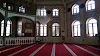
It is adjacent to the Bozdoğan arch in the district of Fatih. The church (Azize Theotokos Kyriotissa), which served as a church before the Kalenderhane Mosque, is an eastern Roman era building in the Vefa district of Istanbul. The old ceiling frescoes of the church period can be seen. The dome is huge and the lighting windows are perfect.
It is a historical mosque right next to the Bozdoğan Aqueduct. Its brick-clad architecture is worth seeing.
Beautiful antique collector
The mosque was converted from the old Byzantine church by Fatih Sultan Mehmed.
Beautiful Mosque
The mosque, which historians stated to be the church of Akataleptos Monastery, was converted into a mosque during the time of Sultan Mehmet the Conqueror. A great work
A mosque like a flower. Warm tea served in these cold weather always warms our inside. May Allah be pleased with those who think and do.
The attendant is polite. You can buy tea from inside.He was in the church before.
An interesting mosque that was formerly a Kilis mosque
I saw the outside, it was beautiful, I saw the back side, it was as if there are many trees like a forest. It was as if you could not pass through the green. Since the building was first used by dervishes belonging to the Kalender Sect, its name was Kalenderhane. In the courtyard of the mosque, there are wall remains that were included in the structure in the early days of the church but now have been demolished. The dome of the mosque is placed on the circle formed by arches knitted from four corners. There are mosaic patterns on the dome, apparently not long ago. Especially the marble coverings in the building are eye-catching.
A more than spiritual place, reminiscent of a beautiful ancient time
Kalenderhane MosqueIn Kalenderhane Neighborhood, adjacent to the historical aqueducts, it is a 3-minute walk from Vezneciler Metro Station.It is one of the oldest works actively used in Istanbul. Although its establishment date is not known exactly, it is estimated to be at least 1000 years old.Built as an Orthodox Church in the Byzantine period, this prayer house was converted into a mosque by Babüssaade Ağa Maktul Beşir Ağa, 400 years after the Turks took Istanbul.Kalenderhane MosqueLocated in Kalenderhane Mahallesi, adjacent to the historical water arches, 3 minutes walk from Vezneciler Metro Station.It is one of the oldest works which are used actively in Istanbul. Although the date of foundation is unknown, it is estimated to be at least 1000 years old.This place of worship, which was built as Orthodox Church in the Byzantine period, has been turned into a mosque by Babüssaade Ağa Maktul Beşir Ağa after 400 years after the Turks took Istanbul.
An ancient historical mosque that I recommend to visit
The mosque is neglected
A heritage from the past to the present day, when you enter the mosque, you can feel the mystical atmosphere from the past to the present when you touch its walls.
It is possible to see Hagia Sophia from time to time inside the mosque. Kalenderhane mosque is also an important detail as it has been shaped as a mosque by the people around it. I would like to remind you to come to Kalenderhane Mosque and to perform a peaceful prayer in this important temple.
Byzantine Church of Our Lady of Kiriotissa, 12th century.
Sultan II. When Mehmed converted Hagia Sophia, the biggest church of the city, into a mosque after the conquest, when he converted several Byzantine monasteries into Islamic establishments to meet the first needs in the town that became Turks and Islamized, they also turned their churches into mosques. The Kalenderhan Mosque, which is one of the foundations of Sultan Mehmed the Conqueror, was allocated to the Kalenderî religious dervishes as lodges by the sultan himself for his services and efforts in the siege right after the conquest. However, with the Istanbul topography, XVI. In the first half of the century, the Istanbul Foundation of Tahrir, dated 953 (1546), which gives important information about the foundations in Istanbul, does not have a record of the Kalenderhâne Mosque, which is mentioned in several places due to the properties in its neighborhood. The reason for this is that, like the Old Imaret and Zeyrek Church mosques, this place is not included in the book by counting as the foundation of the Salahat.
It would be better if we took care of our history a little more. It is a peaceful mosque in a place very close to Sulaimaniyah.
It is a place to go with its historical texture. However, there seem to be too much leaflet. This disrupted the ambience - especially at the entrance of the mosque.
It has been converted from a church into a mosque. A cute little mosque.
This is a very old historical building converted from a church
There are different views on the old name of the church located on the Marmara side of the Bozdogan Arch in the Vezneciler district around Şehzadebaşı. Until 1935, it was suggested in all publications that the building was the Church of Diakonissa. However, the Diakonissa Church built in the 5th century is not so old in terms of its plan and architecture. Based on a very unclear information found in a foundation of Fatih Sultan Mehmed who was first published in 1935, it became clear that the building could be the Akataleptos Monastery Church. There was indeed a monastery known by this name adjacent to the Bozdoğan Arch. However, this is the first time in the Byzantine history XI. century. In recent research, two fresco paintings of the Virgin Mary found in one of the side cells have been nicknamed Kyriotissa. For this reason, although the church belongs to the Monastery of Akataleptos, it is likely to bear the name of Mary. As a matter of fact, the church of the Pantokrator Monastery consisted of three adjacent structures and all of them were named after separate saints.
BEAUTIFUL MOSQUE
Vezneciler is a very beautiful mosque converted from the church close to the metro exit
The church and its surrounding structures were built in different periods. Next to Valens Aqueduct, a bath was built in the end of the 4th century and in the 5th century. The hammam consists of four rooms and a half-round courtyard. In the middle of the 6th century, a part of the bath was demolished and a structure with an apse was built. 6.-8 next to this structure with apse. A church was built between the centuries. When this church collapsed during the Latin occupation, a chapel dedicated to Saint Francis of Asissis in 1250-1260 was built and decorated with frescoes depicting the life of the saint. Today, the frescoes are exhibited in the Istanbul Archaeological Museum.The Church of Our Lady of Kyritiossia was built between 1195-1203. The church has a closed Greek cross plan. The area where the cross arms intersect is covered with a dome. The dome rises above 16 piers and pendants. The area where the cross arms intersect is covered with a vault. To the west of the church are the inner and outer narthex. The narthexes have gallery sections.Between the years 1204-1261 the church was passed into the hands of the Franciscans. The southern side chapel mentioned above was decorated in this period. 1261 After the reign of Constantinople in the hands of the Byzantine Empire, the church was restored.After the conquest of Istanbul, the church and monastery were converted into a mosque used by the Kalenderi dervishes. The building is known as Akateleptos Monastery in the foundation of Fatih Sultan Mehmet. Structure 17.-19. century has seen repairs. It has been reorganized since the mid-20th century.The excavations and restorations carried out jointly by Dumbarton Oaks and Istanbul Technical University between 1966-1976 yielded many findings related to the church. The fresco and mosaic decorations were found in various parts of the building community. One of them is u Presentation of Jesus to the Temple da on the mosaic panel on the wall in the northeast corridor between the north and the apse of the Mother Church. This painting is one of the examples that reflects the pre-iconic capital art. The painting is exhibited in the Istanbul Archaeological Museum.The church is still open to worship as Kalenderhane Mosque.
An ancient archaeological mosque from which the Islamic spirituality is full
Kalenderhane Mosque is a building from the Eastern Roman period in Vefa district of Istanbul. It is located to the south of the eastern end of the Bozdogan Arch. It is in the form of the Eastern Orthodox Church. It was converted into a mosque by the Ottomans in the 18th century. Most probably the church was dedicated to Theotokos Kyriotissa in its original state. The structure represents one of the few examples of a Byzantine church with arches of the Greek cross. It is assumed that the building belongs to the 9th or 10th century according to the plan and style features. The building was first used by the dervishes belonging to the Kalender Order during the Ottoman period and became Kalenderhane. In the courtyard of the mosque, there are remains of walls that were included in the building in the early days of the church, but now they are demolished.The dome of the mosque is placed on the circle formed by arches built from four corners. There are mosaic patterns in the dome, which is understood not to be used in the past. Especially the marble claddings in the building are eye-catching.HistoricalThe first building on this site was the Roman bath. Following the sixth century (dating from stonemasonry), the large dome and semi-domes of the church were rising despite the Bozdağan arch. Later - possibly the seventh century - a larger church was built to the south of the first church. A third church was once again used as a sanctuary.The semi-domes were later demolished by the Ottomans, which could be dated as the end of the twelfth century during the Commenian era. The church was surrounded by monastery structures, all of which were completely destroyed during the Ottoman period. After the conquest of Constantinople in the Latin, the building was used as a Roman Catholic church. After the conquest of Istanbul in 1453, the church was given to the Kalenderi dervishes by Sultan Mehmed the Conqueror.The dervishes used it as a madrasah. Since then it was known as Kalenderhane (Kalender house). In the 18th century Babüssaade (palace) Agha was converted into a mosque by Maktul Beşir Agha. Damaged by fire and earthquake, the mosque was restored in 1854. In 1930, the minaret of the Kalenderhane Mosque was destroyed by lightning.It was abandoned due to the collapse of its minaret. It was the subject of a research and excavation conducted between 1966-1975 in collaboration with Harvard University and Istanbul Technical University. It was restored in 1968 while it was devastated and reopened for worship.
It is a magnificent structure that Ecdadin transformed into a cult and destroyed by the republic.
This historical mosque, which is adjacent to the Bozdoğan Arch in Vezneciler district of Istanbul and also located at the foot of the Vezneciler dormitory, is estimated to have been built in about 5 centuries. in other words, it was a church built before Islam was born. Just like the Hagia Sophia mosque, this was converted into a mosque with the conquest of Istanbul by the Turks. The mosque is really magnificent and it was one of the biggest places of worship. The excavations carried out in the garden of this mosque have found the foundations of the hammam here, we understand that many historical buildings existed in this region before. would really recommend to anyone who is one of the beautiful monuments to be seen in Istanbul.
The mosque was built from a church of unknown history ... the architectural structure of the mosque is very interesting ... A wonderful mosque ...
These historical places, which are also located in Istanbul viziers, serve as the glass of the present duty, I think it belongs to the Roman period.
The mosque of the most beautiful moments in 2009
A historical monument converted from a church into a mosque
Filled history and spirituality
It has a calm and mystical environment, a work that is in harmony with the historical texture and deserves attention with its different architecture converted from a church to a mosque.
After the conquest of Istanbul, Fatih Sultan Mehmed allocated the order to be given his name in exchange for the service they gave to the Kalenderi sect. On the basis of the traces of the Byzantine there are also the names of the saints.
A. ragip akyavas, âsithane 1st volume p. Our glass, which has information about 118. tdv broadcasts.
Another piece on the shore, waiting to be discovered. I witnessed heartbreaking images in which walls were built on its columns, freaks were added, a heater was mounted on their walls, and an old apartment door was installed at the entrance of a section and many more unnecessary things were hung. Its a shame no one is following them ...
Wonderful
After the conquest, Fatih Sultan Mehmet assigned this church to Kalender dervishes. The monastery rooms were repaired and given to dervishes. In the first half of the 18th century, the mosque was repaired by the Al-Aqsa Al-Aqsa mosque and was converted into a mosque. Bashir Agha has also appointed a teacher to read Sahih Bukhari.The foundation established here; After being declared as an institution dedicated to the poor, the needy and the guests, a total of 100 dirhams have been allocated to the duty and orphans. Which of the orphans to do help was determined by the local woman of Istanbul.
Kalenderhane, which was previously a church, was later converted to a mosque. The pulpit is bent. It is a bit creepy from the church but because it is a student friendly mosque. Imam cordially, there is tea every day. There are also study places in the garden. Very close to Istanbul University.
History converted into a mosque when it was a church kokuyot
They put tea pot inside the mosque and saw those who came there to drink tea and thought it was nice. Hot water is available but the sinks are very neglected.
The original Byzantine structure in the place where the Kalenderhane Mosque is located is the temple of Kriotissa belonging to the Akaleptos Monastery Church. The temple is dedicated to the Virgin Mary after the conquest of Istanbul. The place, which was used as a lodge by the Kalenderi dervishes, was converted into a mosque in the 18th century.Kalenderhane Mosque is important in terms of Byzantine works. Some of the Saint Francesco mosaics exhibited in Istanbul Archaeological Museums Istanbul Works hall are among the rare historical works that survived the 13th century Latin invasion.The oldest artifact remaining from the church period of the Kalenderhane Mosque is Bebek Isa mosaic composition. The work exhibited in the Istanbul Artifacts Hall of the Istanbul Archeology Museum is about 1400 years old. The fact that the Baby Jesus mosaic board remained from the 7th century and that the Kriotissa Church is even older than the construction date shows that there was another temple on the same foundation. The 120-year iconaclasm period, which deeply affected Byzantine Istanbul, was experienced. In this period, all kinds of portraits are prohibited. Baby Jesus, on the other hand, is one of the rare works that survived the iconaclasm period without being harmed. It is also considered the oldest painting in Istanbul.
- Address:Kalenderhane, 16 Mart Şehitleri Cd. No:11, 34134 Fatih/İstanbul, Turkey
- Mosque
- Tourist attraction
Similar organizations
- Suleymaniye MosqueSüleymaniye Mah, Prof. Sıddık Sami Onar Cd. No:1, 34116 Fatih/İstanbul, Turkey
- Laleli MosqueKemal Paşa, Ordu Cd., 34134 Fatih/İstanbul, Turkey
- Hagia SophiaSultan Ahmet, Ayasofya Meydanı No:1, 34122 Fatih/İstanbul, Turkey
- Ahmediye Mosqueİskenderpaşa, 34091 Fatih/İstanbul, Turkey
- The Blue MosqueSultan Ahmet, Atmeydanı Cd. No:7, 34122 Fatih/İstanbul, Turkey