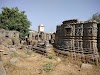
Nice Temple... peaceful
Good
The earliest mention of a divine monkey, interpreted by some scholars as the proto-Hanuman, is in hymn 10.86 of the Rigveda, dated to between 1500 and 1200 BCE. The twenty-three verses of the hymn are a metaphorical and riddle-filled legend. It is presented as a dialogue between multiple characters: the god Indra, his wife Indrani and an energetic monkey it refers to as Vrisakapiand his wife Kapi. The hymn opens with Indrani complaining to Indra that some of the soma offerings for Indra have been allocated to the energetic and strong monkey, and the people are forgetting Indra. The king of the gods Indra responds by telling his wife that the living being (monkey) that bothers her is to be seen as a friend, and that they should make an effort to coexist peacefully. The hymn closes with all agreeing that they should come together in Indras house and share the wealth of the offerings.This hymn, which includes an explicit discussion of sex and differences between species, has been interpreted in a number of ways by contemporary scholars. R.N. Dandekar states that it may metaphorically refer to another fertility god, while Wendy Doniger compares it to a horse sacrifice. Stephanie Jamison states that the hymn mentions a bull-monkey, a euphemism for a horse and fertility ritual, very different from the later era Hanuman. According to Philip Lutgendorf, there is no convincing evidence for a monkey-worshipping cult in ancient India.The orientalist F. E. Pargiter (1852-1927) theorized that Hanuman was a proto-Dravidian deity. According to this theory, the name Hanuman derives from the Tamil word for male monkey (ana-mandi), first transformed to Anumant – a name which remains in use. Anumant, according to this hypothesis, was later Sanskritized to Hanuman because the ancient Aryans confronted with a popular monkey deity of ancient Dravidians coopted the concept and then Sanskritized it.According to Murray Emeneau, known for his Tamil linguistic studies, this theory does not make sense because the Old Tamil word mandi in Caṅkam literature can only mean female monkey, and Hanuman is male. Further, adds Emeneau, the compound ana-mandi makes no semantic sense in Tamil, which has well developed and sophisticated grammar and semantic rules. The prominent jaw etymology, according to Emeneau, is therefore plausible.
Good place and peaceful
Nice place
Outstanding
My home
Look guys
Hanuman temple umta
- Address:Umta, Bihar 804424, India
- Hindu temple
- Wheelchair accessible entrance:Yes
Similar organizations
- Goga Maharaj TempleVisnagar - Kheralu Rd, Umta, Gujarat 384320, India
- chehar mata temple umtaUmta, Gujarat 384320, India
- શ્રી ગણપતિ મંદિર ઉમતા,Umta, Gujarat 384320, India
- Fuleshwar Mahadev MandirUmta, Gujarat 384320, India
- Chamunda Mata Mandir UmtaUmta, Gujarat 384320, India
- UmUmta , Ganpti TempleUmta, Gujarat 384320, India
- Goga Maharaj Temple Umta(ધરમોડા વાળા)Umta, Gujarat 384320, India
- UmUmta Jain TempleUmta, Gujarat 384320, India
- Ruins of Ancient Jain TempleUmta, Gujarat 384320, India
- Umata Jain MandirVisnagar - Kheralu Rd, Umta, Gujarat 384320, India